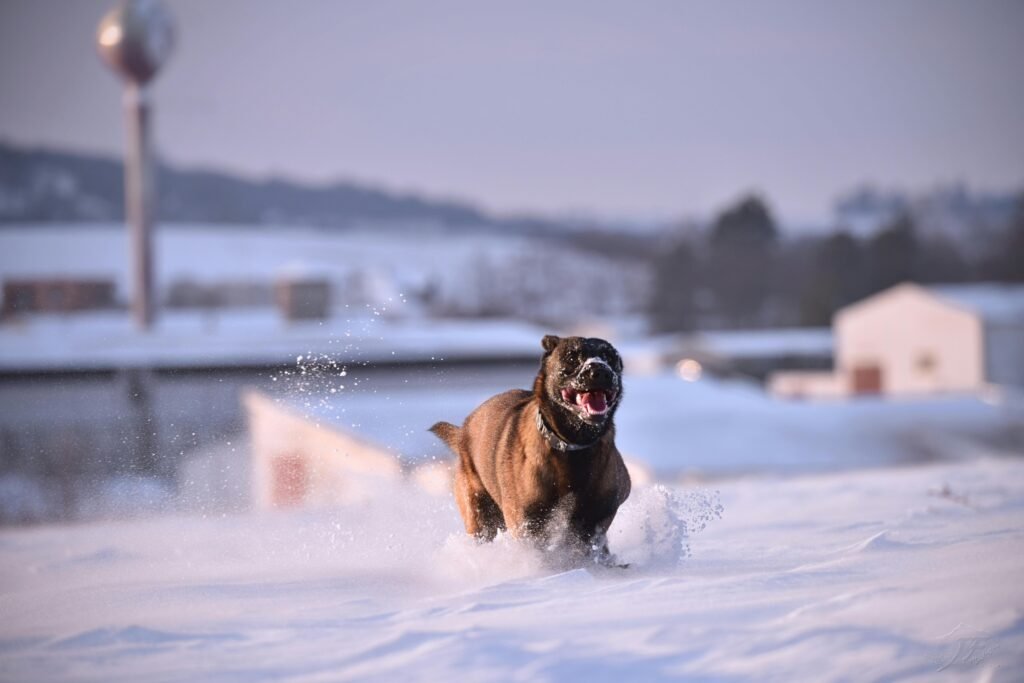
Does your dog’s excitement in the snow make you think they’re unaffected by the cold? This common misconception can create a false sense of security. In reality, winter conditions bring real dangers for dogs, including life-threatening hypothermia and frostbite.
What Are the Signs My Dog Is Cold?
Dogs show many of the same cold signals as people, like shivering. When you see these signs, it’s time to go inside and warm up.
Changes in your dog’s behavior are strong indicators of them being cold. Watch for signs like whining, a slower pace, searching for warm places to lie down, showing anxiety, or lifting a paw off the ground. Shivering is a clear sign your dog is too cold, but it may stop if hypothermia progresses. Also, skin that looks pale or body parts that feel cold to the touch can signal frostbite. It’s important to warm your dog up before these serious signs appear.
Tips for Keeping Your Dog Warm in the Cold
While limiting outdoor time is the most straightforward strategy to keep your dog warm in winter, it’s not always possible to stay indoors. When walks or playtime in the snow are necessary, employing specific protective steps can significantly reduce the risks posed by cold temperatures, ice, and road salt.
A good pair of dog boots serves as a crucial barrier against harsh elements. They keep your dog’s feet warm, guard them from injuries caused by jagged ice and toxic road salts, and effectively stop snow from clumping around the paw pads, ensuring comfort and safety during winter walks.
A cozy dog sweater offers sufficient warmth for cool days, while a coat that resists wind and water delivers essential defense against severe weather conditions.